
Phad painting is a traditional Indian art form that originates from the state of Rajasthan. This unique style of painting is known for its vibrant colors and storytelling elements, making it a significant part of India’s rich cultural heritage.
🎉 Calling All Creative Students!
Unleash your imagination in the Areawala Child Painting Challenge !
✨ Showcase your art and earn:
- 🏅 A Prestigious Gold Medal
- 📄 A Free Certificate of Participation
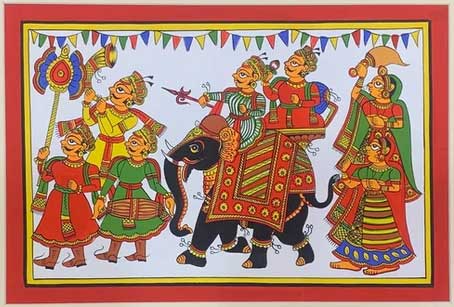
Image source: phadchitra.com
A Historical Perspective on Phad Paintings
This painting has a history that dates back over 700 years. It was initially created to narrate the epic stories of local deities and heroes. The Bhopa community, who are traditional storytellers, used these paintings as mobile temples. They would travel from village to village, using the Phad as a backdrop for their performances. These paintings thus played a crucial role in preserving and disseminating local folklore.
Artistic Characteristics of Phad Art
This paintings are characterized by their bold lines and bright colors. Natural pigments are used to create these vibrant hues. Typically, a painting is done on a long piece of cloth or canvas. The entire canvas is filled with intricate details, depicting scenes from the lives of folk deities such as Pabuji and Devnarayan.
A unique feature of painting is its storytelling format. The paintings are designed to be read in a sequential manner, much like a comic strip. Each section of the canvas tells a part of the story, leading the viewer through a visual narrative.
The Process of Creating Phad Art Paintings
Creating a this type of painting involves several meticulous steps. First, the canvas is prepared by soaking it in water and then coating it with a mixture of flour and glue. This process ensures that the canvas is smooth and durable. After this, the artist sketches the outline of the design using a fine brush.
Natural pigments, derived from minerals and plants, are used to fill in the colors. Each color holds symbolic meaning and is applied in a specific order. The final step involves outlining the entire painting with bold black lines, which enhance the details and add depth to the artwork. This painstaking process can take several weeks to months, depending on the complexity of the painting.
Preservation and Contemporary Relevance of Phad Paintings
In recent years, efforts have been made to preserve the tradition of Phad art painting. Cultural organizations and dedicated artists are working together to keep this art form alive. Workshops and exhibitions are held to educate people about its history and techniques. Moreover, contemporary artists are experimenting with modern themes and styles, ensuring that painting continues to evolve.
FAQs
What materials are used in Phad paintings?
Natural pigments derived from minerals and plants are used. The canvas is typically made of cloth prepared with a mixture of flour and glue.
How are Phad paintings different from other Indian art forms?
Phad paintings are unique for their storytelling format and bold use of color. Unlike other art forms, they are designed to narrate epic tales through sequential scenes.
Where can I learn to create Phad paintings?
You can learn from all type hand painting from Areawala Art Teacher. We provide 1 to 1 live class for almost type of art classes.
View India’s popular art form
- Madhubani Painting: Also called Mithila Painting. Vibrant folk art from Bihar, known for intricate patterns and storytelling.
- Warli Art: Tribal art form from Maharashtra, characterized by simplistic yet expressive depictions of daily life.
- Tanjore Painting: Classical South Indian art form renowned for its rich use of gold foil and vibrant colors.
- Kalamkari Painting: Ancient art form from Andhra Pradesh, using natural dyes and intricate storytelling on cloth.
- Mughal Painting: Detailed miniature paintings from the Mughal era, showcasing courtly scenes and historical events.
- Pattachitra Painting: Traditional art form from Odisha, featuring bold lines, vibrant colors, and mythological themes.
- Gond Painting: Tribal art form from Madhya Pradesh, celebrated for its vibrant colors and intricate patterns inspired by nature.
- Rajasthani Miniature Painting: Diverse styles of miniature paintings from Rajasthan, depicting courtly life, landscapes, and religious themes.
- Kerala Mural Painting: Elaborate and colorful murals found in Kerala’s temples and palaces, showcasing Hindu mythology and folklore.
- Thangka Painting: Tibetan Buddhist art form practiced in parts of India, revered for its spiritual significance and intricate details.
- Kangra Painting: Miniature painting style from Himachal Pradesh, known for its romantic themes and delicate brushwork.
- Pichwai Painting: Devotional art form from Rajasthan, depicting Lord Krishna and his various leelas.
- Kalighat Painting: Folk art from Bengal, characterized by simple lines, bold colors, and depictions of everyday life and deities.
- Mysore Painting: Traditional art form from Karnataka, known for its delicate brushwork and intricate details.