
India is a treasure trove of diverse art forms, each with its own unique story and cultural significance. Among these, Kalamezhuthu art from Kerala stands out for its intricate beauty and deep spiritual roots. Let us explore this mesmerizing art form and understand its importance in Kerala’s cultural heritage.
🎉 Calling All Creative Students!
Unleash your imagination in the Areawala Child Painting Challenge !
✨ Showcase your art and earn:
- 🏅 A Prestigious Gold Medal
- 📄 A Free Certificate of Participation
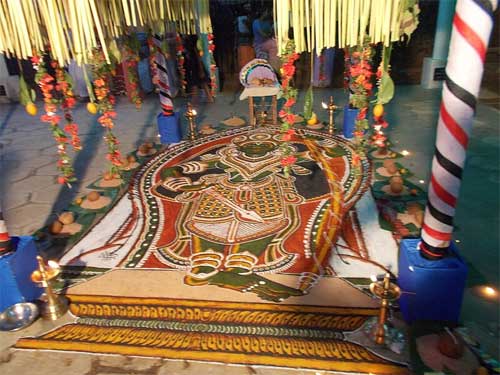
Image source: wikimedia
What is Kalamezhuthu Art?
Kalamezhuthu, literally meaning “drawing with lines,” is a traditional art form practiced in Kerala. It involves creating intricate patterns and images on the floor using natural powders. These drawings, known as “Kalam,” are often made during religious and ceremonial occasions. The art form is deeply connected to Hindu rituals and is primarily seen in temples and sacred spaces.
Historical Background
Kalamezhuthu traditional art has ancient origins, tracing back to centuries-old temple traditions. It is believed to have started as a form of worship and devotion, with the drawings serving as offerings to deities. The art form has been passed down through generations, preserving the spiritual and cultural practices of Kerala.
The Artists
The creators of Kalamezhuthu traditional art are known as Kalamezhuthumakkal or Kalakar. These artists are highly skilled and often come from families with a long tradition of practicing this art. They are well-versed in the rituals and customs associated with Kalamezhuthu, and their work is considered a form of divine service.
Materials and Techniques
Kalamezhuthu traditional art is created using natural powders made from various substances:
- White: Made from rice flour
- Black: Derived from charcoal
- Red: Extracted from turmeric or red earth
- Yellow: Made from turmeric
These powders are meticulously applied to the floor to create detailed and colorful patterns. The artists use their hands to draw, often starting with the outline and then filling in the details. The process is elaborate and can take several hours to complete.
Themes and Symbolism
Kalamezhuthu art primarily depicts Hindu deities and symbols. Common themes include images of gods and goddesses like Kali, Vishnu, and Ganesha. Each drawing is rich in symbolism and is meant to invoke the presence and blessings of the deities. The intricate patterns and vibrant colors are believed to create a sacred space, enhancing the spiritual atmosphere of the ceremony.
Cultural and Religious Significance
Kalamezhuthu is more than just an art form; it is a crucial aspect of Kerala’s religious life. The drawings are an integral part of various rituals, including temple festivals, Theyyam performances, and other ceremonial events. They are believed to bring good fortune, ward off evil, and please the deities.
Preservation and Revival
Despite its deep cultural significance, Kalamezhuthu art faces challenges in the modern world. Urbanization and changing lifestyles have led to a decline in traditional practices. However, efforts are being made to preserve and promote this art form. Cultural organizations, temple authorities, and art enthusiasts are working together to keep the tradition alive. Workshops and exhibitions are organized to educate the younger generation and foster appreciation for this unique art.
Conclusion
Kalamezhuthu art is a beautiful expression of Kerala’s rich cultural and spiritual heritage. Its intricate designs and vibrant colors reflect the devotion and skill of the artists. By understanding and appreciating this art form, we can help preserve a valuable part of India’s diverse artistic traditions. Let us celebrate Kalamezhuthu as a symbol of the deep connection between art, culture, and spirituality in Kerala.
Frequently Asked Questions about Kalamezhuthu Art
Q1. What is Kalamezhuthu art?
Kalamezhuthu art is a traditional floor drawing practiced in Kerala, India. It involves creating intricate patterns and images on the ground using natural powders made from substances like rice flour, charcoal, turmeric, and red earth. This art form is closely associated with Hindu rituals and ceremonies.
Q2. Who are the artists of Kalamezhuthu art?
The artists of Kalamezhuthu art are known as Kalamezhuthumakkal or Kalakar. These skilled individuals often come from families with a long tradition of practicing this art. They are knowledgeable about the rituals and customs linked to Kalamezhuthu and create these artworks as a form of divine service.
Q3. What materials are used in Kalamezhuthu art?
Kalamezhuthu artists use natural powders to create their drawings:u003cbr/u003eu003cbr/u003eWhite: Rice flouru003cbr/u003eBlack: Charcoalu003cbr/u003eRed: Turmeric or red earthu003cbr/u003eYellow: Turmericu003cbr/u003eu003cbr/u003eThese powders are carefully applied by hand to form detailed and colorful designs on the floor.
Q4. What themes are depicted in Kalamezhuthu art?
Kalamezhuthu art primarily depicts Hindu deities and religious symbols. Common themes include images of gods and goddesses such as Kali, Vishnu, and Ganesha. These drawings are rich in symbolism and are meant to invoke the presence and blessings of the deities, enhancing the spiritual atmosphere of the ceremonies.
Q5. How is Kalamezhuthu art being preserved and promoted today?
Efforts to preserve and promote Kalamezhuthu art include organizing workshops, exhibitions, and cultural programs. These initiatives aim to educate the younger generation about this traditional art form and foster appreciation for it. Cultural organizations, temple authorities, and art enthusiasts are actively involved in these efforts to keep the tradition alive and vibrant.
View India’s popular art form
- Madhubani Painting: Also called Mithila Painting. Vibrant folk art from Bihar, known for intricate patterns and storytelling.
- Warli Art: Tribal art form from Maharashtra, characterized by simplistic yet expressive depictions of daily life.
- Tanjore Painting: Classical South Indian art form renowned for its rich use of gold foil and vibrant colors.
- Kalamkari Painting: Ancient art form from Andhra Pradesh, using natural dyes and intricate storytelling on cloth.
- Mughal Painting: Detailed miniature paintings from the Mughal era, showcasing courtly scenes and historical events.
- Pattachitra Painting: Traditional art form from Odisha, featuring bold lines, vibrant colors, and mythological themes.
- Gond Painting: Tribal art form from Madhya Pradesh, celebrated for its vibrant colors and intricate patterns inspired by nature.
- Rajasthani Miniature Painting: Diverse styles of miniature paintings from Rajasthan, depicting courtly life, landscapes, and religious themes.
- Kerala Mural Painting: Elaborate and colorful murals found in Kerala’s temples and palaces, showcasing Hindu mythology and folklore.
- Thangka Painting: Tibetan Buddhist art form practiced in parts of India, revered for its spiritual significance and intricate details.
- Kangra Painting: Miniature painting style from Himachal Pradesh, known for its romantic themes and delicate brushwork.
- Pichwai Painting: Devotional art form from Rajasthan, depicting Lord Krishna and his various leelas.
- Kalighat Painting: Folk art from Bengal, characterized by simple lines, bold colors, and depictions of everyday life and deities.
- Mysore Painting: Traditional art form from Karnataka, known for its delicate brushwork and intricate details.