
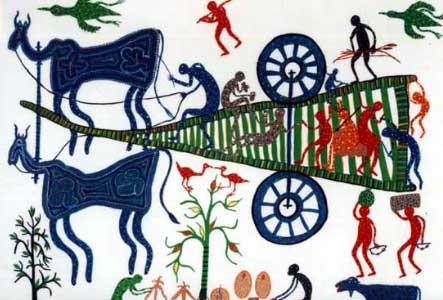
Discover the captivating art form of Bhil paintings, an integral part of the Bhil tribe’s cultural identity. Explore their vivid depictions of nature, mythology, and daily life through this enchanting traditional ritual.
🎉 Calling All Creative Students!
Unleash your imagination in the Areawala Child Painting Challenge !
✨ Showcase your art and earn:
- 🏅 A Prestigious Gold Medal
- 📄 A Free Certificate of Participation
The Bhil History:
There are many theories about the origins of the Bhil tribe, but historians have not confirmed any one theory yet. Texts mention the Bhils more frequently in recent times.
The Bhil Lifestyle:
The Bhils only marry within their own community and class. They have close family relationships based on love and respect. They are considered very superstitious and follow strict rules. Their religion involves many spirits, ghosts, gods, and goddesses.
The Bhils have different forms of marriage that allow choosing partners freely. There is a bride price system across all marriages. During births, weddings and festivals, they sing songs to invite blessings from elders, ancestors and deities. The Bhils dance garba and invite goddesses to join through songs.
Among Bhils of Jhabua, Pithora painting is an important ritual. Pithora horses are painted and offered to devas by traditional painters. The paintings depict the Bhil creation myth about a prince restoring laughter, songs and dance.
The Bhil paintings show the sun, moon, animals, trees, insects, rivers, fields, gods, and mythological figures.
Like other tribal people, Bhils live close to nature. Their livelihood is agriculture, so they face hardship in droughts. Before sowing, they are anxious about rains. Without rains, many Bhils migrate to cities for construction labor work between sowing and harvesting.
FAQ of Bhil Paintings
Q: What is a Bhil painting?
A: Bhil painting is a traditional art form originating from the Bhil tribal community of Rajasthan, India. These paintings are known for their simplicity and vibrant use of colors. They typically depict local mythology, nature scenes, and the daily lives of the Bhil people. The art is practiced on walls, floors, or cloth.
Q: Who is a famous Bhil community painter?
A: Bhuri Bai is a renowned Indian Bhil artist from the Pitol village of Madhya Pradesh. She belongs to the Bhil tribe, which is the largest tribal group in India.
Q: What is the difference between Bhil art and Gond art?
A: Gond art is more well-defined, with visible contours and extensive use of dots, dashes, and lines. In contrast, Bhil art tends to convey impressions using scattered or neatly arranged dots of various colors, creating forms reminiscent of Aboriginal art.
Q: What tools do Bhils use?
A: The Bhils use locally made bows and arrows, swords, knives, and axes, which serve as weapons for self-defense and hunting wild animals that form a significant part of their diet. They also use wheat and rice during festivals and special occasions.u003cbr/u003eu003cbr/u003eAlthough Bhil painting makes intelligent use of natural materials such as neem twigs, turmeric, leaves, vegetables, flour and oil.
Q: What is tribal painting called?
A: Tribal painting is a broad term that encompasses various artistic forms practiced by indigenous communities in India. Some well-known examples include Warli, Gond, Madhubani, Pattachitra, Pithora, and Rajasthani miniature paintings.
View India’s popular art form
- Madhubani Painting: Also called Mithila Painting. Vibrant folk art from Bihar, known for intricate patterns and storytelling.
- Warli Art: Tribal art form from Maharashtra, characterized by simplistic yet expressive depictions of daily life.
- Tanjore Painting: Classical South Indian art form renowned for its rich use of gold foil and vibrant colors.
- Kalamkari Painting: Ancient art form from Andhra Pradesh, using natural dyes and intricate storytelling on cloth.
- Mughal Painting: Detailed miniature paintings from the Mughal era, showcasing courtly scenes and historical events.
- Pattachitra Painting: Traditional art form from Odisha, featuring bold lines, vibrant colors, and mythological themes.
- Gond Painting: Tribal art form from Madhya Pradesh, celebrated for its vibrant colors and intricate patterns inspired by nature.
- Rajasthani Miniature Painting: Diverse styles of miniature paintings from Rajasthan, depicting courtly life, landscapes, and religious themes.
- Kerala Mural Painting: Elaborate and colorful murals found in Kerala’s temples and palaces, showcasing Hindu mythology and folklore.
- Thangka Painting: Tibetan Buddhist art form practiced in parts of India, revered for its spiritual significance and intricate details.
- Kangra Painting: Miniature painting style from Himachal Pradesh, known for its romantic themes and delicate brushwork.
- Pichwai Painting: Devotional art form from Rajasthan, depicting Lord Krishna and his various leelas.
- Kalighat Painting: Folk art from Bengal, characterized by simple lines, bold colors, and depictions of everyday life and deities.
- Mysore Painting: Traditional art form from Karnataka, known for its delicate brushwork and intricate details.