
Mughal painting is a rich art form that emerged in India during the Mughal Empire. It combines Persian, Indian, and Islamic styles. This art is known for its detailed and colorful miniatures.
🎉 Calling All Creative Students!
Unleash your imagination in the Areawala Child Painting Challenge !
✨ Showcase your art and earn:
- 🏅 A Prestigious Gold Medal
- 📄 A Free Certificate of Participation
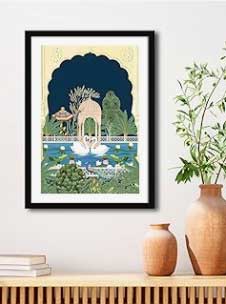
Image source: Amazon | WA 9990004135 for Art Class | Buy Mughal Painting from Amazon
Origin and History
Mughal painting began in the 16th century under Emperor Akbar. It flourished during the reigns of Akbar, Jahangir, and Shah Jahan. The art was used to illustrate manuscripts and decorate palaces.
The Process
Creating a Mughal art painting involves several steps:
- Preparing the Surface: Artists use paper, ivory, or sometimes wood as the base.
- Drawing the Outline: They draw detailed outlines with fine brushes.
- Coloring: Bright and rich colors are applied using natural pigments.
- Detailing: Artists add intricate details, including fine lines and gold leaf.
Themes and Motifs
Mughal art paintings depict various themes
- Royal Life: Scenes of court life, including royal portraits and daily activities.
- Nature: Detailed depictions of animals, birds, and plants.
- Historical Events: Important battles and events from the Mughal period.
- Literature: Illustrations of stories from Persian and Indian literature.
Unique Characteristics
Mughal art paintings have special features
- Detailed Miniatures: The paintings are small and highly detailed.
- Rich Colors: Artists use bright and vibrant colors.
- Realistic Depictions: The art shows a high level of realism and detail.
- Gold and Silver Leaf: These are often used to add richness and sparkle.
Modern Relevance
Today, Mughal tradititional paintings are admired worldwide. They are displayed in museums and private collections. Modern artists draw inspiration from Mughal art, keeping the tradition alive.
FAQs
Q1. What is Mughal art painting?
Mughal art painting is a traditional Indian art form that combines Persian, Indian, and Islamic styles. It is known for its detailed and colorful miniatures.
Q2. Where did Mughal art painting originate?
Mughal art painting originated in India during the Mughal Empire in the 16th century.
Q3. What materials are used in Mughal art painting?
Artists use paper, ivory, or wood as the base. They use natural pigments for colors and sometimes gold and silver leaf.
Q4. How is a Mughal art painting made?
Artists prepare the surface, draw detailed outlines, apply rich colors, and add intricate details.
Q5. What themes are common in Mughal art?
Common themes include royal life, nature, historical events, and literature.
Q6. What makes Mughal art paintings unique?
Mughal art paintings are unique for their detailed miniatures, rich colors, realistic depictions, and use of gold and silver leaf.
Q7. Can Mughal art paintings be used for home decor?
Yes, Mughal art paintings can be framed and used as elegant and historic home decor.
Q8. Where can I buy authentic Mughal art paintings?
You can buy authentic Mughal art paintings from art galleries, antique shops, and online stores.
Q9. How is Mughal art being preserved today?
Mughal art is preserved through museums, exhibitions, and by promoting traditional artists.
Q10. Are there modern adaptations of Mughal painting?
Yes, modern artists create new works inspired by Mughal painting, blending traditional and contemporary styles.
Conclusion
Mughal painting is a beautiful blend of Persian, Indian, and Islamic art. Its detailed miniatures and rich colors make it a unique and valuable part of Indian heritage. Supporting Mughal art helps preserve this historical tradition for future generations.
View India’s popular art form
- Madhubani Painting: Also called Mithila Painting. Vibrant folk art from Bihar, known for intricate patterns and storytelling.
- Warli Art: Tribal art form from Maharashtra, characterized by simplistic yet expressive depictions of daily life.
- Tanjore Painting: Classical South Indian art form renowned for its rich use of gold foil and vibrant colors.
- Kalamkari Painting: Ancient art form from Andhra Pradesh, using natural dyes and intricate storytelling on cloth.
- Pattachitra Painting: Traditional art form from Odisha, featuring bold lines, vibrant colors, and mythological themes.
- Gond Painting: Tribal art form from Madhya Pradesh, celebrated for its vibrant colors and intricate patterns inspired by nature.
- Rajasthani Miniature Painting: Diverse styles of miniature paintings from Rajasthan, depicting courtly life, landscapes, and religious themes.
- Kerala Mural Painting: Elaborate and colorful murals found in Kerala’s temples and palaces, showcasing Hindu mythology and folklore.
- Thangka Painting: Tibetan Buddhist art form practiced in parts of India, revered for its spiritual significance and intricate details.
- Kangra Painting: Miniature painting style from Himachal Pradesh, known for its romantic themes and delicate brushwork.
- Pichwai Painting: Devotional art form from Rajasthan, depicting Lord Krishna and his various leelas.
- Kalighat Painting: Folk art from Bengal, characterized by simple lines, bold colors, and depictions of everyday life and deities.
- Mysore Painting: Traditional art form from Karnataka, known for its delicate brushwork and intricate details.